
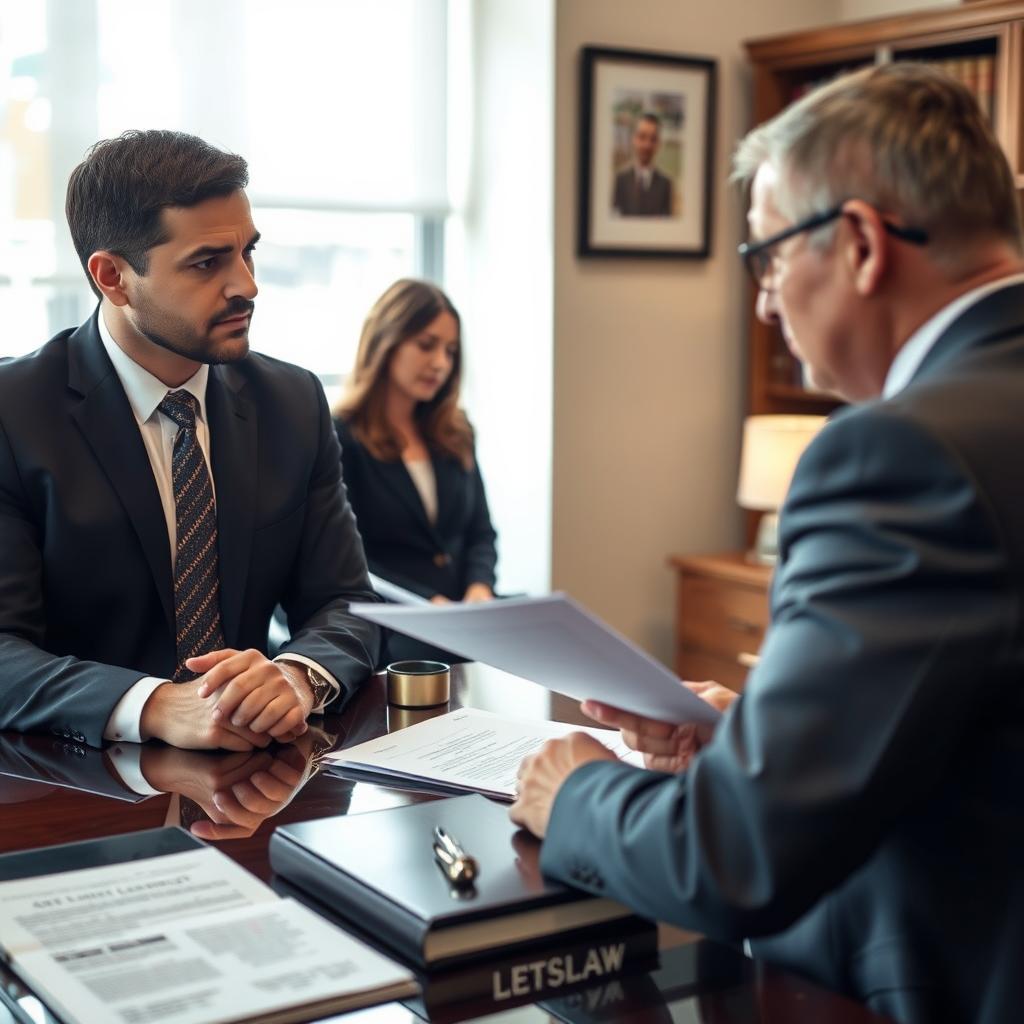
Refusal Lawyer Alexandria, VA
If you are facing a breath‑test refusal charge in Alexandria, Virginia, the consequences can affect your driver’s license, your insurance rates, and in some cases your criminal record. At Law Offices Of SRIS, P.C., Mr. Sris and his Of Counsel focus a substantial part of their traffic‑law practice on refusal and implied‑consent violations. The firm has served clients in Alexandria since 1997, appearing regularly at the Alexandria General District Court at 520 King Street. Reach our Arlington location, which represents Alexandria clients, at (888) 437‑7747 to schedule a consultation. Mr. Sris and his Of Counsel have documented over 4,739 case results firm‑wide. Results may vary. Law Offices Of SRIS, P.C. – Advocacy Without Borders.
What a Breath‑Test Refusal Means in Alexandria
Virginia’s implied‑consent law, Va. Code § 18.2‑268.3, applies to any driver lawfully arrested for driving under the influence. By driving on Virginia roads, you are deemed to have consented to a breath or blood test if an officer has probable cause. A refusal triggers an administrative license suspension separate from the underlying DUI charge—and in Alexandria, the refusal proceeding is heard in the General District Court alongside the related traffic matter. The court sits within the Eighteenth Judicial District and handles all refusal cases for the City of Alexandria, Old Town, Del Ray, and Kingstowne.
Because Alexandria is a compact independent city with busy corridors like I‑395, Route 1, and King Street, law enforcement is highly active. A refusal allegation often arises during a traffic stop that escalates. Mr. Sris and his Of Counsel understand the particular dynamics of Alexandria’s law‑enforcement agencies and the procedural nuances at the Alexandria General District Court. Procedural missteps in the administration of the implied‑consent warning can provide grounds to challenge the refusal allegation. Each case, however, turns on its own factual record, and no single defense strategy fits every situation.
How Mr. Sris and His Of Counsel Handle Refusal Cases
The approach begins by examining the arrest record, the officer’s written report, and any video or audio evidence for compliance with the statutory requirements. Virginia law specifies that a driver must be informed of the implied‑consent obligation and the consequences of refusing. If the warning was incomplete, ambiguous, or untimely, the validity of the refusal finding may be attacked. Mr. Sris and his Of Counsel also review the legality of the underlying traffic stop, because an unlawful stop can taint everything that follows.
At the Alexandria General District Court, refusal cases are heard by the judge, who determines whether the refusal was unreasonable. The proceeding is civil‑administrative for a first offense, so the standard of proof is lower than the criminal beyond‑a‑reasonable‑doubt standard. Nevertheless, the suspension period can be as long as one year for a first refusal. Mr. Sris and his Of Counsel prepare witnesses, cross‑examine the officer, and present mitigating evidence when appropriate. For a second refusal within ten years, the matter becomes a criminal misdemeanor, making legal representation even more critical. Throughout the process, the firm works to protect the client’s driving privileges and, when possible, negotiate a resolution that avoids a finding of unreasonable refusal.
Penalties for Refusal under Virginia Law
The statute establishes a tiered penalty structure. A first‑offense unreasonable refusal is a civil violation resulting in a one‑year license suspension. A second offense within a ten‑year lookback period is a Class 2 misdemeanor punishable by up to six months in jail and a fine of up to $1,000, together with a three‑year suspension. A third or subsequent refusal within ten years is a Class 1 misdemeanor carrying up to twelve months in jail, a fine of up to $2,500, and a three‑year suspension. Additionally, DMV demerit points may be assessed, and the refusal finding can complicate any parallel DUI prosecution. Insurance premiums typically rise substantially after a refusal‑related suspension.
The Alexandria Court Process for Refusal Allegations
When an officer initiates an implied‑consent violation, the driver receives a notice of suspension that also serves as a temporary driving permit for seven days. The suspension takes effect automatically unless a hearing is requested. The request must be made promptly, and the case is docketed at the Alexandria General District Court. At the hearing, the Commonwealth has the burden to prove that the arrest was lawful, that the driver was properly warned, and that the refusal was unreasonable. Mr. Sris and his Of Counsel represent clients at this hearing, often challenging any procedural error. If the General District Court sides with the Commonwealth, an appeal may be taken to the Alexandria Circuit Court within ten days, where the case is heard de novo—that is, a completely new trial before a different judge.
About Mr. Sris and His Of Counsel Team
Mr. Sris, Owner and Founder of Law Offices Of SRIS, P.C., has been practicing in Virginia since 1997. A former prosecutor, he brings an understanding of how the state builds refusal and implied‑consent cases. He is admitted to practice in Virginia, Maryland, the District of Columbia, New Jersey, and New York. Mr. Sris testified before the Virginia House Courts of Justice Committee in support of 2019 HB 635 (chief patron Del. David Bulova). Alongside him, his Of Counsel team contributes decades of combined experience in traffic‑defense matters. Over 120 years of combined legal experience between Mr. Sris and his Of Counsel is brought to each client representation. Results may vary.
Frequently Asked Questions
Is refusing a breath test a crime in Virginia?
Refusing a breath test after a lawful DUI arrest is a civil infraction for a first offense but becomes a criminal misdemeanor for subsequent refusals within ten years. Under Va. Code § 18.2‑268.3, the first refusal triggers a one‑year administrative license suspension with no criminal penalties. A second refusal within ten years is a Class 2 misdemeanor, and a third or subsequent is a Class 1 misdemeanor. Because the criminal stakes rise with each offense, early legal intervention is critical.
Can a refusal charge be challenged in Alexandria court?
Yes, a refusal finding can be challenged on procedural and constitutional grounds at the Alexandria General District Court. Mr. Sris and his Of Counsel review whether the officer had probable cause to arrest, whether the implied‑consent warning was given correctly, and whether the driver’s refusal was truly unreasonable. Video or audio recordings often contain errors that undermine the state’s case. Each challenge is fact‑specific, and outcomes depend on the evidence presented.
What happens if I am found to have unreasonably refused in Alexandria?
The immediate consequence is a driver’s license suspension, and the refusal finding becomes part of your DMV record. For a first‑offense civil refusal, the suspension is one year. The finding can also be used as evidence of consciousness of guilt in a parallel DUI or DWI trial, potentially increasing the likelihood of a DUI conviction. DMV demerit points and insurance rate increases typically follow. A skilled attorney can help you navigate the process and, when possible, seek to have the refusal finding overturned on appeal.
Do I need a lawyer for a refusal hearing in Alexandria?
While you are not legally required to have an attorney at a refusal hearing, the procedural and evidentiary challenges involved make representation strongly advisable. The hearing is adversarial, and the officer will be represented by the Commonwealth’s Attorney. An experienced attorney can cross‑examine the officer, force the state to meet its burden of proof, and identify errors that a self‑represented litigant might miss. Mr. Sris and his Of Counsel appear regularly at the Alexandria General District Court on these matters.
How long does a refusal hearing take to schedule in Alexandria?
The Alexandria General District Court generally sets refusal hearings within several weeks of the request, but the timeline varies with the court’s docket. The notice of suspension acts as a temporary driving permit for seven days, so prompt action to request a hearing is important. Because the suspension takes effect automatically if no hearing is requested, it is wise to contact an attorney immediately after receiving a refusal allegation. Each case follows its own schedule, and Mr. Sris and his Of Counsel monitor the docket to ensure timely appearances.
What defenses are available against a refusal allegation?
Common defenses include lack of probable cause for the DUI arrest, improper administration of the implied‑consent warning, and evidence that the driver did not actually refuse. For example, if the officer failed to inform the driver that refusal could result in a one‑year suspension, the refusal finding may be invalid. Similarly, a driver who was confused, in physical distress, or who actually agreed to take the test but was denied the opportunity may have a viable defense. Mr. Sris and his Of Counsel examine the entire arrest sequence to build the strong $1 for each client.
Can a refusal suspension be appealed to a higher court?
Yes, a refusal finding in the Alexandria General District Court may be appealed to the Alexandria Circuit Court within ten days. The appeal is heard de novo, meaning the Circuit Court gives a fresh look at the evidence without deference to the lower court’s decision. An appeal can be strategically beneficial if the General District Court judge made an error or if new evidence has come to light. Mr. Sris and his Of Counsel handle both levels of court, maintaining continuity for the client through any appeal.
Does a refusal charge affect my DUI case in Alexandria?
Yes, a refusal finding can be admitted as evidence in a parallel DUI prosecution to suggest consciousness of guilt, potentially making the DUI case harder to defend. However, a refusal finding does not by itself prove intoxication. The DUI charge must still be proven beyond a reasonable doubt. In some instances, a successful challenge to the refusal may weaken the DUI case by undermining the officer’s credibility or the legality of the stop. Mr. Sris and his Of Counsel handle both the refusal and the DUI case together, aligning the defense strategies to protect the client’s overall position.
How does Mr. Sris’s prosecutorial background help in refusal cases?
Mr. Sris is a former prosecutor who understands how the Commonwealth builds implied‑consent cases and where procedural weaknesses often exist. This insight allows him to anticipate the prosecution’s arguments, identify gaps in the evidence early, and negotiate from a position of knowledge. Combined with his Of Counsel, who include attorneys with prior law‑enforcement experience, the team brings a comprehensive understanding of both sides of a refusal allegation. Results may vary.
Is there a difference between a breath‑test refusal and a blood‑test refusal in Virginia?
Under Virginia law, the implied‑consent statute applies equally to both breath and blood tests, so the penalty structure for refusal is the same. Whether an officer requested a breath or blood sample, an unreasonable refusal triggers the same suspension and potential criminal consequences. The choice of test is typically made by the officer, and Mr. Sris and his Of Counsel examine whether the officer had the authority to demand a particular type of test under the circumstances. The defense approach is similar for both breath‑test and blood‑test refusal allegations.
Traffic Defense Resources in Nearby Virginia Localities
Mr. Sris and his Of Counsel also represent clients in traffic‑defense matters across Northern Virginia. See our pages for related localities:
Fairfax County traffic defense · Fairfax City traffic lawyer · Falls Church traffic attorney · Prince William County traffic representation · Manassas traffic defense
For an overview of the firm’s traffic‑defense practice, visit our Virginia traffic‑defense attorneys.
Outbound primary sources: Va. Code § 18.2‑268.3 · Alexandria General District Court · Virginia’s Judicial System
Law Offices Of SRIS, P.C.
Arlington Location — 1655 Fort Myer Dr, Suite 700, Room 719, Arlington, VA 22209
By appointment. Call (703) 589‑9250 or toll‑free (888) 437‑7747.
Attorney advertising. Prior results do not guarantee a similar outcome. Results may vary. Case results depend on a variety of factors unique to each case.