
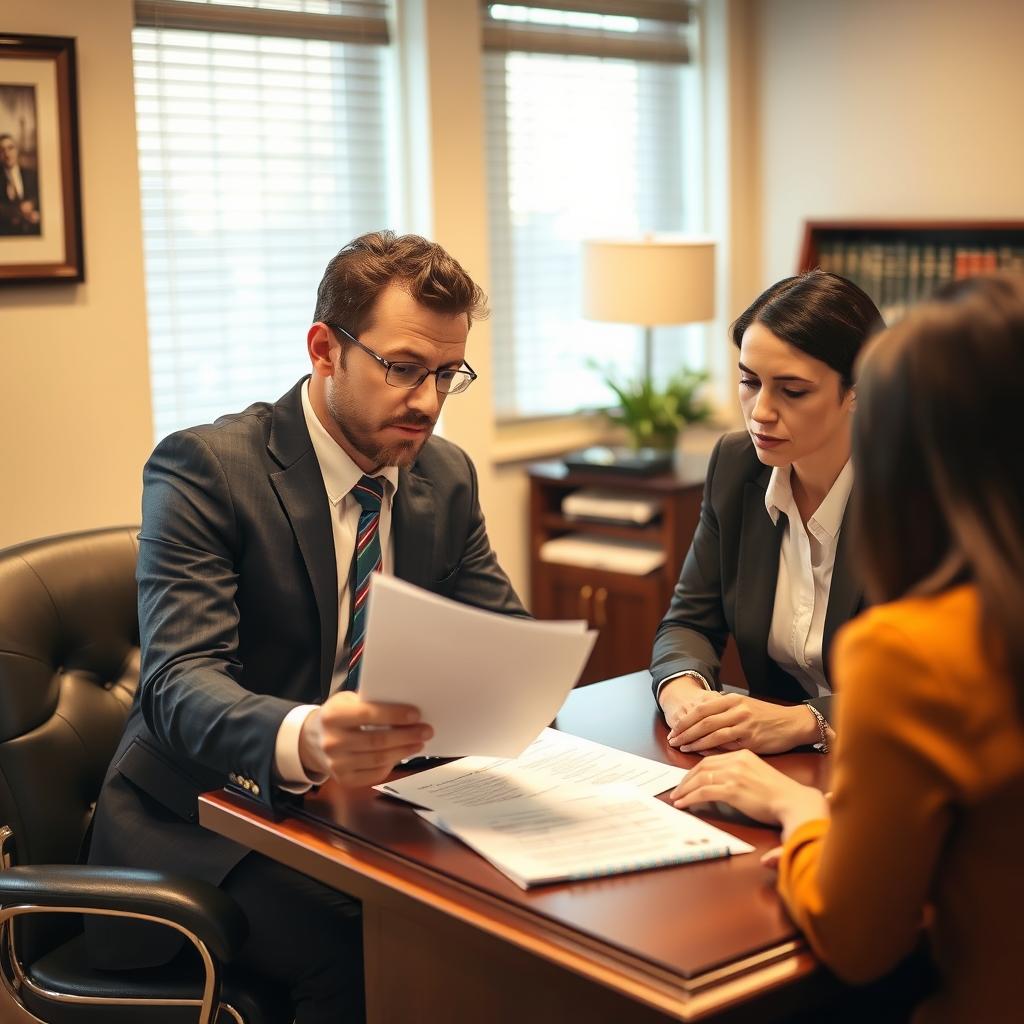
Breath Test Refusal Lawyer Near Me
You are driving home along a quiet Virginia roadway when the red and blue lights appear in your rearview mirror. The officer claims to smell alcohol and asks you to step out of the car. After a series of field sobriety exercises, you are handed a breath test device. You hesitate. You have heard stories—some say refusing is the better move. So you decline. Within moments, you are facing a charge entirely separate from a DUI: a breath test refusal under Virginia’s implied consent law.
Now you are searching for a breath test refusal lawyer near you. The charge carries serious consequences, including a mandatory license suspension and potential criminal penalties. But a refusal is not a conviction, and with a clear understanding of the law and a well-prepared defense, many people successfully challenge the allegation. At Law Offices Of SRIS, P.C., Mr. Sris and his Of Counsel team handle refusal cases across Virginia, using decades of combined experience to protect driving privileges and criminal records.
What a Breath Test Refusal Means in Virginia
Under Virginia law, when you drive on a public highway, you are deemed to have given implied consent to a chemical test of your breath or blood if you are arrested for driving under the influence. If you unreasonably refuse to submit to the test after being lawfully arrested, you face administrative and criminal consequences under Va. Code § 18.2-268.3.
A first refusal is treated as a civil violation, resulting in a one-year license suspension. There is no restricted license eligibility during that year. A second refusal within ten years is a Class 2 misdemeanor, punishable by up to six months in jail and a fine of up to $1,000. A third or subsequent refusal is a Class 1 misdemeanor, carrying up to twelve months in jail and a fine of up to $2,500. In addition, each refusal triggers an automatic license suspension, separate from any suspension imposed for a DUI conviction.
Virginia takes refusal cases seriously, but the charge is defensible. The Commonwealth must prove that the arrest was lawful, that you were properly advised of the implied consent law, and that your refusal was unreasonable. A knowledgeable lawyer will examine each element, and often, procedural missteps by the officer can lead to a dismissal or a reduction of the charge.
Strategy Options After a Refusal
When you work with Mr. Sris and his team, the first step is a thorough review of the traffic stop and arrest. The officer must have had reasonable suspicion to initiate the stop and probable cause to arrest you for DUI before demanding a breath test. If the initial stop was flawed—for example, if the officer lacked a legitimate reason to pull you over—any evidence obtained afterward, including the refusal allegation, may be suppressed.
Another common defense centers on whether you were properly informed of the consequences of refusing. Virginia law requires the officer to read you the implied consent warning. If the warning was not given, or was given inaccurately, the refusal may be invalid.
Additionally, a refusal must be intentional and knowing. If you were confused, physically unable to provide a sample, or did not clearly understand the request due to a language barrier or medical condition, a court may find that the refusal was not unreasonable.
In many cases, the arresting officer’s observations and the video from the patrol car dashboard camera become key evidence. Mr. Sris and his Of Counsel have extensive experience scrutinizing police reports and video footage to identify inconsistencies and violations of proper procedure.
What to Expect Throughout the Process
After a breath test refusal, two separate proceedings may move forward—the criminal case in the General District Court and an administrative license suspension through the Virginia Department of Motor Vehicles. Both demand swift attention.
The DMV will mail you a notice of suspension shortly after the arrest. You typically have a limited window to request an administrative hearing to contest the suspension. If you do not request the hearing, the suspension takes effect automatically. Mr. Sris and his team can request the hearing on your behalf and appear with you to argue that the refusal was not unreasonable.
Meanwhile, the criminal charge will proceed through the local General District Court. The timeline depends on the court’s docket, but your presence will be required at an arraignment and later at a trial. Because a refusal can be charged as a misdemeanor, it is a criminal matter, and a conviction creates a criminal record.
The court process generally follows these steps:
- Arraignment. You are formally advised of the charge and enter a plea.
- Pre-trial motions and discovery. Your lawyer obtains the police reports, dashcam video, and any calibration records for the breath test device. Motions to suppress evidence may be filed if the stop or arrest was unlawful.
- Trial. The Commonwealth must prove the elements of the refusal beyond a reasonable doubt. Your lawyer may cross-examine the officer, present witness testimony, and argue that the refusal was not unreasonable.
- Sentencing, if convicted. If you are found guilty, the judge will impose the penalty prescribed by law. In many instances, negotiations with the prosecutor can lead to a reduction of the charge.
People often ask whether they must appear in court. Because refusal charges are mandatory-court offenses in Virginia, your personal appearance is generally required. Mr. Sris and his Of Counsel will appear with you and handle all legal arguments so that you are not alone in the courtroom.
Penalty Overview
Virginia imposes escalating penalties for breath test refusals. A first offense results in a one-year license suspension and is classified as a civil infraction. A second refusal within ten years is a Class 2 misdemeanor, carrying a possible jail sentence of up to six months and a fine of up to $1,000. A third or subsequent refusal is a Class 1 misdemeanor, with a potential jail term of up to twelve months and a fine of up to $2,500. In each instance, the license suspension remains in effect for one year with no option for a restricted license during that period.
Beyond the criminal and administrative consequences, a refusal conviction can have long-term effects on your driver’s license points, insurance rates, and employment, especially if you hold a commercial driver’s license. An experienced attorney can evaluate the strengths and weaknesses of the Commonwealth’s case and pursue every opportunity to avoid or minimize these consequences.
Attorney Credentials You Can Rely On
Mr. Sris, Owner and Founder of Law Offices Of SRIS, P.C., brings a background as a former prosecutor to every refusal defense. He understands how law enforcement builds these cases and where the vulnerabilities lie. Mr. Sris testified before the Virginia House Courts of Justice Committee in support of 2019 HB 635 (chief patron Del. David Bulova), demonstrating a commitment to the legislative process that shapes the laws affecting Virginians.
Mr. Sris is assisted by an Of Counsel team with extensive combined legal experience in traffic defense and criminal litigation. Mr. Sris and his Of Counsel appear in courts throughout the Commonwealth. They have handled breath test refusal matters in General District Courts from Fairfax to Prince William, and in localities across Northern Virginia and beyond. Results may vary.
The firm has been practicing since 1997 and is available to answer your call at (888) 437-7747 any day of the year. We encourage you to reach our Fairfax location to discuss your situation and learn how we can help.
Frequently Asked Questions
What happens if I refuse a breath test in Virginia?
If you refuse a breath test after a lawful DUI arrest in Virginia, you face an automatic one-year license suspension and potential criminal charges depending on your prior record. A first refusal is a civil violation; a second refusal within ten years is a Class 2 misdemeanor, and a third is a Class 1 misdemeanor carrying up to a year in jail. The suspension is separate from any DUI penalty and takes effect regardless of whether you are convicted of DUI. You have the right to an administrative hearing, and a lawyer can challenge the refusal’s validity. For guidance on your specific situation, reach Law Offices Of SRIS, P.C. at (888) 437-7747.
Can I fight a breath test refusal charge?
Yes, a refusal charge can be contested on several grounds. Common defenses include showing that the police stop lacked reasonable suspicion, the arrest was not supported by probable cause, or the officer failed to properly advise you of the implied consent law. A refusal must be unreasonable; if you were confused or physically unable to provide a sample, the court may rule in your favor. An experienced attorney will review the evidence and challenge procedural errors. To discuss the details of your matter, contact Law Offices Of SRIS, P.C. at (888) 437-7747.
Will I lose my license if I refuse a breath test?
A breath test refusal results in a mandatory one-year license suspension under Virginia law, with no eligibility for a restricted license during that year. This administrative suspension goes into effect even if the criminal refusal charge is later dismissed. You can request a DMV hearing to contest the suspension, and if you win, the suspension may be overturned. However, if you lose, the one-year suspension stands. Prompt legal help gives you the trusted chance to preserve your driving privileges. For a consultation, reach Mr. Sris and his Of Counsel at (888) 437-7747.
Is a breath test refusal a criminal offense?
In Virginia, a first-offense breath test refusal is a civil violation, not a crime, though it carries a mandatory license suspension. However, a second refusal within ten years is a Class 2 misdemeanor, and a third or subsequent refusal is a Class 1 misdemeanor, meaning it becomes a criminal charge with possible jail time and a permanent criminal record. The classification depends entirely on your prior refusal or DUI history. Because the stakes escalate with each offense, it is important to challenge every refusal allegation. Reach our location at (888) 437-7747 to discuss your case.
How can a lawyer help with a refusal case?
A lawyer can challenge the lawfulness of the traffic stop, the breath test request, and the refusal allegation itself. An experienced defense attorney will examine whether the officer had reasonable suspicion, whether the implied consent warning was correctly given, and whether any medical or language issues made the refusal reasonable. The lawyer can negotiate with the prosecutor for a reduction or dismissal, represent you at the DMV hearing, and work to minimize the long-term impact on your license and record. To learn how we can assist, call (888) 437-7747.
What should I do if I am facing a refusal charge?
Contact a Virginia traffic defense attorney as soon as possible. You have a limited time to request a DMV hearing to challenge the license suspension, and acting quickly helps preserve evidence such as dashcam video. Do not speak with law enforcement about the case without an attorney present. Gather any information about the stop, including the officer’s name, the location, and any witness contact details. An attorney will advise you on the trusted strategy moving forward. Reach Law Offices Of SRIS, P.C. at (888) 437-7747 to schedule a consultation.
Can I get a restricted license after a refusal suspension?
No, Virginia law does not allow a restricted license during the one-year suspension for a breath test refusal. This is a strict administrative penalty, and there is no provision for a hardship or work-related license during that period. The only way to avoid the suspension entirely is to win the DMV administrative hearing. That is why it is crucial to have an attorney present at the hearing to argue that the refusal was not unreasonable. Contact our firm at (888) 437-7747 promptly to preserve your hearing rights.
How long does a refusal case stay on my record?
A breath test refusal conviction remains on your Virginia driving record permanently, and the one-year suspension appears on your driving transcript. For criminal misdemeanor refusals, the conviction also creates a criminal record that may appear in background checks. The trusted way to keep a refusal off your record is to fight the charge. To discuss how we can help, call (888) 437-7747.
Take the Next Step
A breath test refusal charge does not have to define your future. Mr. Sris and his Of Counsel team combine former prosecutorial insight with thorough knowledge of Virginia law to protect your rights, your license, and your freedom. We invite you to call (888) 437-7747 any time—phones are answered day or night—to discuss your situation in a confidential consultation.
For a comprehensive statutory analysis of refusal charges in Virginia, visit our main site: srislawyer.com.
Law Offices Of SRIS, P.C.
4008 Williamsburg Court, Fairfax, VA 22032
(888) 437-7747
Attorney advertising. Prior results do not guarantee a similar outcome. Results may vary.
Case results depend on a variety of factors unique to each case.